When someone overdoses outside St. John the Evangelist Episcopal Church, the team inside is prepared.
Staff at the Gubbio Project, a Mission District nonprofit housed in St. John’s on Julian Avenue, carry Narcan, an opioid antagonist, at all times. They say they respond to between three and five overdoses every week on the streets surrounding the church.
It’s all in a day’s work at the Gubbio Project, which receives $2.3 million a year from San Francisco’s Department of Public Health to assist people struggling with homelessness and substance abuse around 16th and Mission streets.
But, with rising tensions around Mission District drug activity erupting into shouting matches and political protests, the Gubbio Project has become a target for a small, but loud, group of critics who blame it for attracting the area’s problems.
“That’s always complicated to defend,” says Lydia Bransten, the Gubbio Project’s executive director. ‘Because we don’t do the pretty work.”
‘I hope you run out of Narcan’
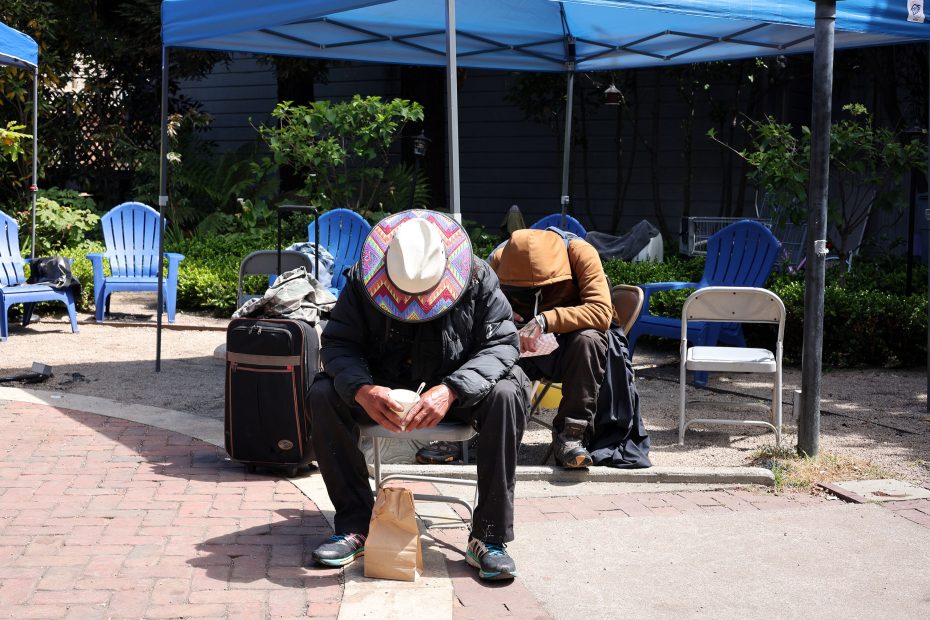
During the Gubbio Project’s general hours — 7 a.m. to 7 p.m., Monday through Friday — between 120 and 150 people pass through St. John’s trellised gates and into its sunlit courtyard each day. Some are homeless, some are drug users, and some are elderly locals who come to visit with friends.
More than a dozen counselors are on hand to offer education on overdose prevention and treatment options. But they also accept guests who just want a place to sit, whether they come in genial, depressed, dazed, or clearly on drugs.
Lines form: One for safe-use supplies, such as fentanyl test strips and sterile syringes, and a second line for coffee and donuts. There are clients who welcome conversation; others simply rest on one of the 45 cots set up before the church’s altar.
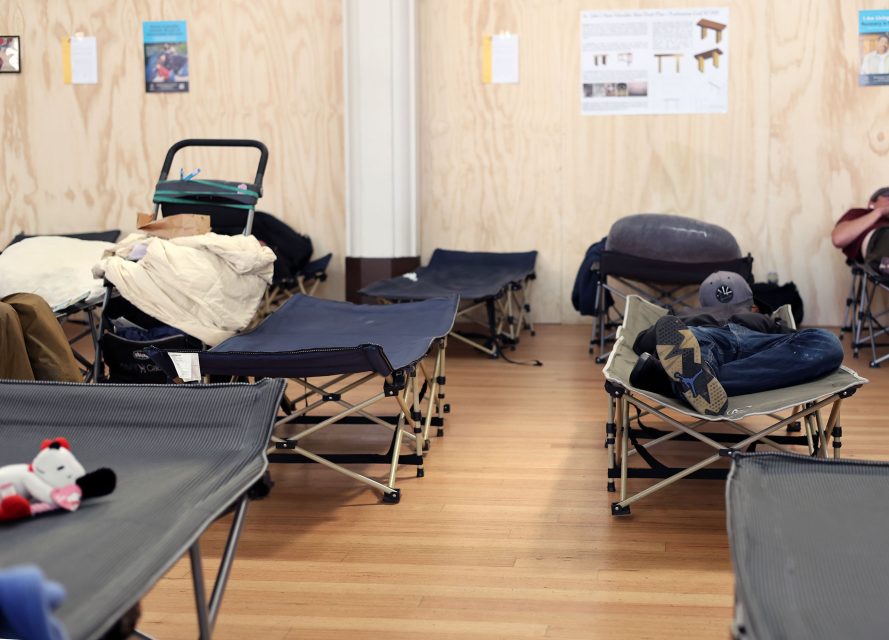
Between January and April, some 2,500 people a month visited the Gubbio Project, the Department of Public Health said. On average, the nonprofit refers 28 people a month to a city-funded substance-use treatment program.
This, staff say, is a relatively high number. People struggling with addiction often reject treatment when it’s offered. Gubbio is tasked with meeting everyone where they are, including those who say they’re not ready yet.
“It’s much easier to promote a program that has such a clear directive, like an abstinence-based treatment program,” Bransten said. “Someone comes in who was formerly using drugs, and they leave the program graduating as a person who’s clean and sober. Our program is more complicated.”
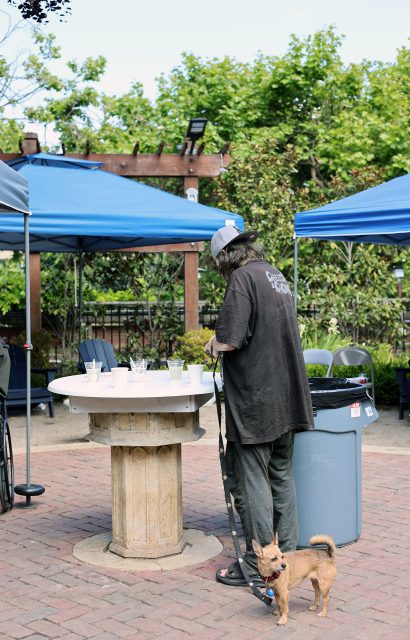
Some neighbors living across the street see Gubbio’s services as life-saving. A few see them as the source of neighborhood ills. Others aren’t sure what to think: They want the city to guide people into recovery, but are weary of being exposed, along with their children, to the often messy work that’s involved.
Drugs are not permitted inside the church or courtyard, and Gubbio Project guests are told not to disturb neighbors by using drugs once they exit.
When Bransten recognizes one of her clients sitting on a nearby street, even after hours, she speaks with them. Anyone using drugs inside is asked to leave, Bransten added, and cut off from services if they keep using.
Still, nearby residents say there are more and more men and women smoking or hunched over, incoherent, in the alleys around the church. When an overdose happens, it is no surprise.
In recent weeks, a few neighbors have called out the Gubbio Project, saying the nonprofit is a blight that attracts and enables drug use.
The discourse has spilled onto social media and drawn political opponents into the fray.
One vocal neighbor, Andrew Wilkens, posted a selfie with Mayor Daniel Lurie on the block and, in another post, pointed to the Gubbio Project as the cause of deteriorating street conditions.
Other opponents of Gubbio who don’t live in the neighborhood have visited to film and circulate videos showing people bent over piles of their belongings inside the church. They accuse the nonprofit of allowing drug use.
At a rally in early May for safer streets that was attended by both residents and politicians, protesters held signs that read, “Go away, Gubbio” and “Harm reduction kills neighborhoods.”
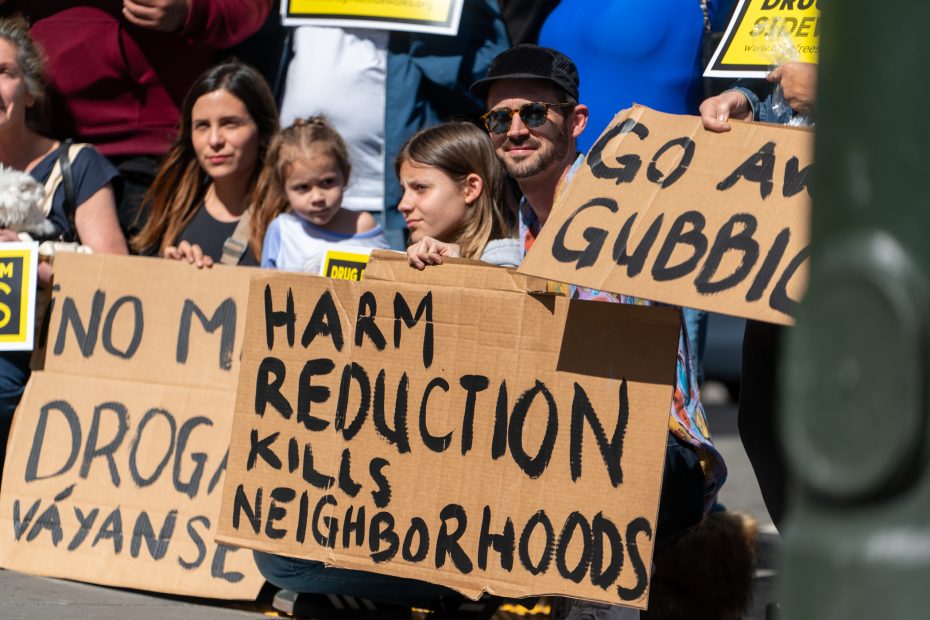
Bransten worries that social media narratives she describes as “violent, aggressive, and vitriolic” are fueling misconceptions about the Gubbio Project’s work.
She said she’s been threatened by online “agitators” who oppose harm reduction services, and that the address of her home, which she shares with her teen daughter, has been doxxed.
“I hope you run out of Narcan,” Bransten recalls being told while responding to a recent street overdose. “This is the first time that I’ve seen this kind of animosity.”
‘The chicken or the egg?’
Ebbs and flows of drug activity have long been part of the landscape in the Mission, long-time residents and service providers say. For decades, people have sought sanctuary at St. John’s.
“The drugs started before us,” volunteer Steve Ibarra said as he handed out coffee at the Gubbio Project last Monday afternoon. Twenty-five years ago, he said, his brother sought food and shelter at the church before beginning a lengthy recovery journey.
In 2004, the Gubbio Project was founded at St. Boniface Church in the Tenderloin to offer unhoused people a safe daytime place to sleep. In 2015, it established an offshoot at St. John’s. In 2021, when it lost its Tenderloin home, it moved all operations to the Mission.

Complaints about social services in the neighborhood are “nothing new,” said former Mission District supervisor Hilary Ronen. During the pandemic, when St. John’s could not offer safe-sleeping spots indoors, some neighbors blamed the church and the Gubbio Project for the encampments that sprung up around it.
In recent months, however, residents’ frustrations about street conditions have boiled over. And workers at the Gubbio Project say the number of people coming to the church has risen dramatically since police crackdowns began in other parts of the city.
At a community meeting in March, Mission Station captain Liza Johansen said that police activity in the Tenderloin had led drug users to relocate to the Mission. Displacement, the San Francisco Police Department says, is unavoidable when it comes to curbing overt drug use.
Pushing people around is “a little bit part of the strategy,” SFPD Commander Derrick Lew acknowledged at a recent city hearing. “We don’t have the resources to blanket the entire city, so we have to strategically choose problem areas.”
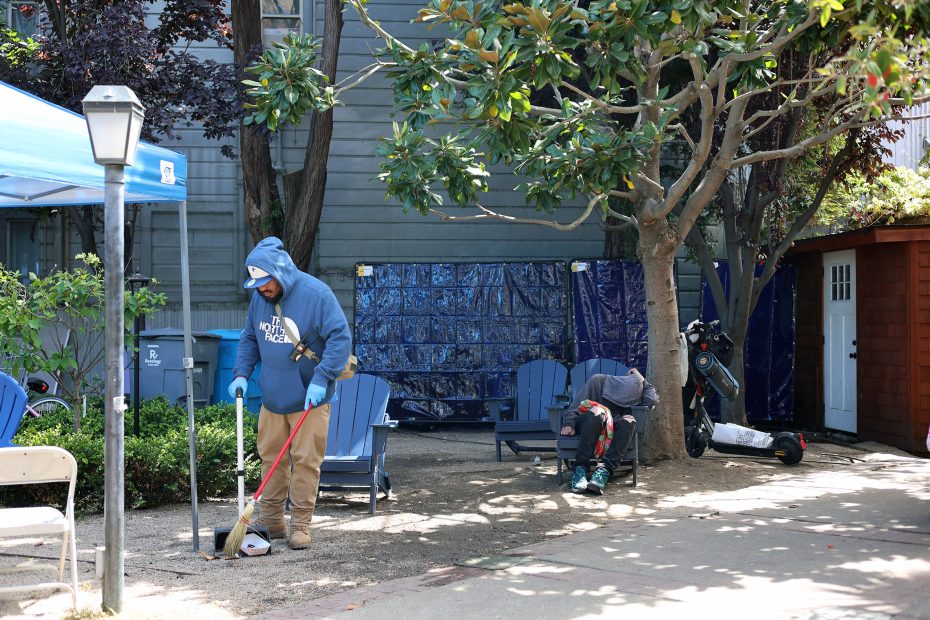
Still, a few neighbors are convinced that the Gubbio Project is “1,000 percent” to blame for the influx of drug use in the area.
“What would happen if Gubbio went away?” asked one man, who declined to give his name. The problem “would go away tomorrow.”
He also accused the organization of “serving drug tourists,” “hiring goons,” and “cooking the books” for personal profit.
The starting salary for Gubbio staff, Bransten said, is around $52,000, less than two-thirds the average San Francisco income. In addition to its $2.3 million from the city, the nonprofit earned donations and other grants that totaled $342,386 in 2022, per its most recent available tax filing. Brasnten’s salary was around $80,000.
“The people who work at Gubbio are angels making poverty wages in order to care for the most downtrodden,” said former Mission supervisor Ronen. “They are part of the solution.”
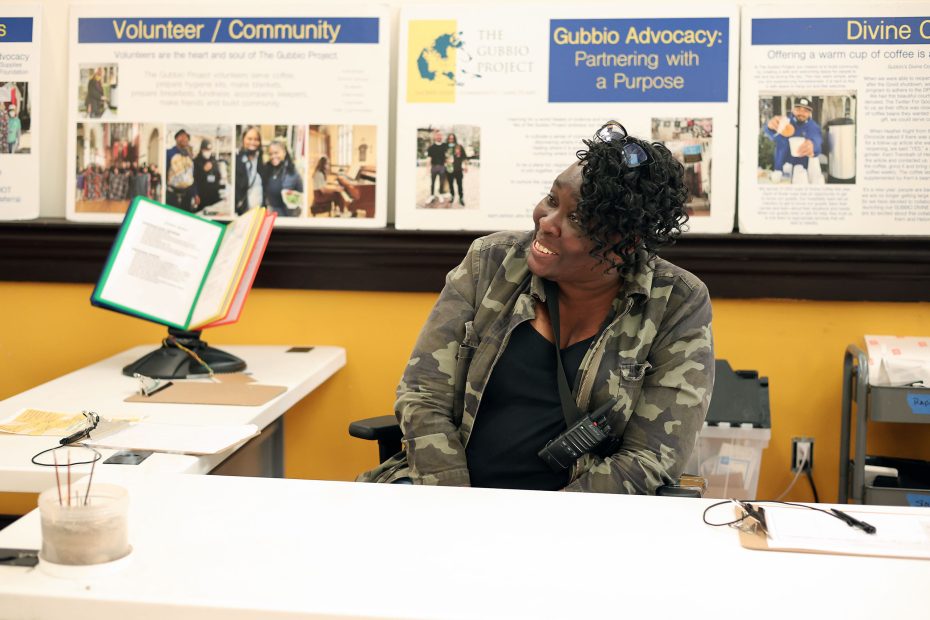
Several Julian Avenue neighbors agree that public health services like the Gubbio Project are the only way to break the cycle of drug use.
The “very select few” who are outspoken Gubbio critics, asserted resident Michael Johnson, are either being manipulated or encouraged into their stance by “broader powers in the city” who have a political agenda.
Other neighbors fall somewhere in the middle of the debate.
Another man, who asked to remain anonymous for fear of retaliation, said he trusted the evidence in favor of harm-reduction services, and disliked the bitter tone of recent community meetings.
But he worried that by giving out supplies meant to prevent overdoses or disease transmission, places like Gubbio attract drug users, and drug dealers follow.
It’s a “chicken and egg problem,” he said.

Addressing a need
Bransten sympathizes with the neighbors’ distress.
As southeastern parts of San Francisco that were once abandoned have been developed, she said, the homelessness, poverty, addiction, and mental illness that occurred out of sight “is now on people’s doorsteps.”
That, she recognized, can be exhausting. “When you have to work three jobs to keep an apartment in the Mission, you don’t want to come home to someone lying in front of your door in crisis.”
But, Bransten said, “The reason that we are here in the Mission is because there was a need here in the Mission, and we are addressing that need.”
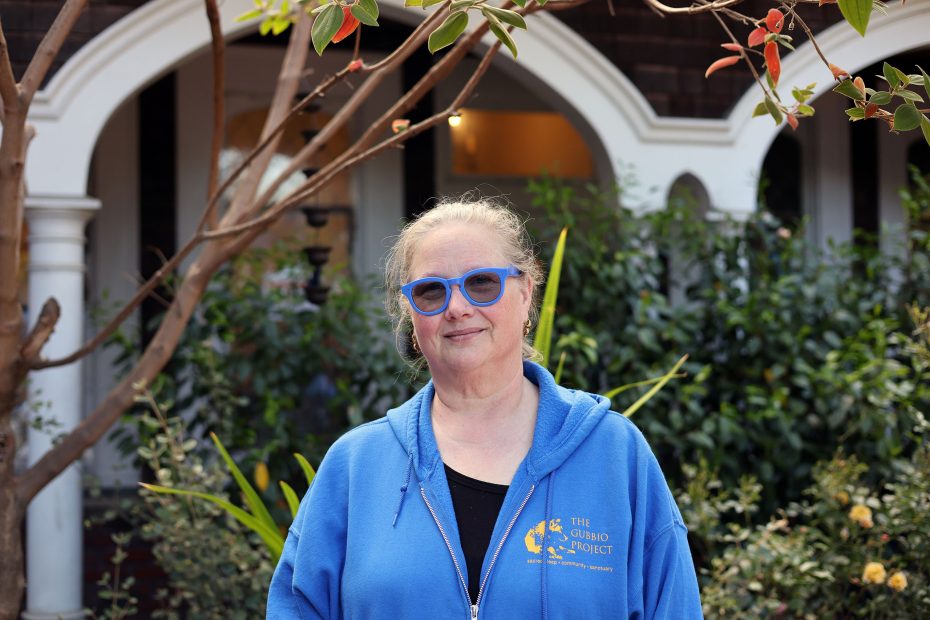
When asked for comment on the Gubbio Project, the mayor’s office directed Mission Local to the Department of Public Health. The agency, which audits the nonprofit, said in a statement that Gubbio “operates in full alignment with the SFDPH Good Neighbor Policy, which requires maintaining clean, safe sidewalks and discouraging any public drug use in the surrounding area.”
“It’s not a free-for-all in here,” said Bransten. It’s “a great team of people who come to this work with compassion and boundaries.”
A few hours into her shift at the Gubbio Project last Wednesday morning, substance-use-disorder specialist Amber Sheldon had already connected two clients to medications used to treat opioid addictions. She’d linked another to a homeless shelter, a fourth to the hospital, and a fifth to a shower, an often-overlooked, basic amenity that can be empowering, she noted.
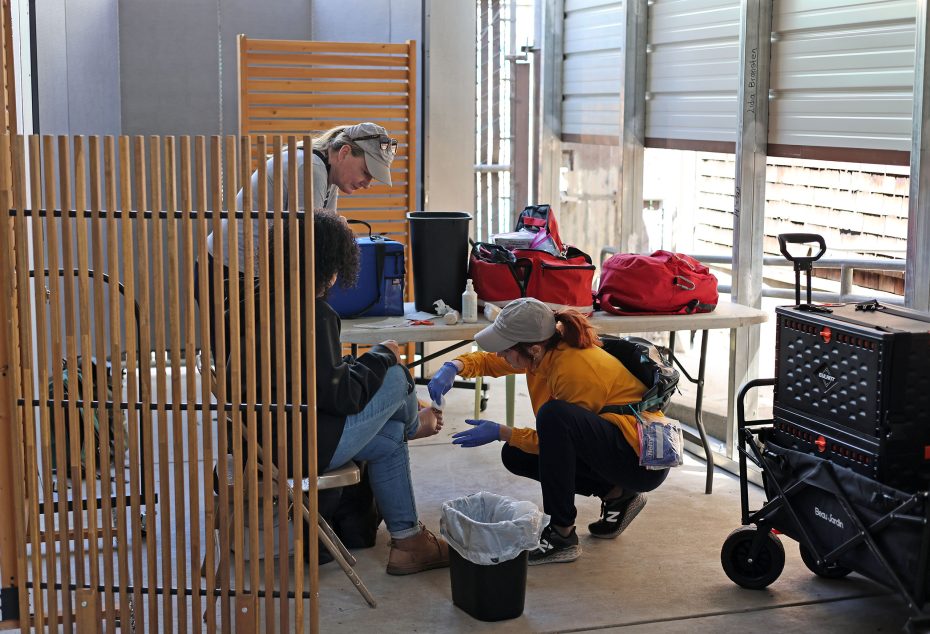
In one corner of St. John’s courtyard, a volunteer registered people for the city’s supportive-housing lottery. On the sidewalk outside, the city’s Homeless Outreach Team called someone a taxi. A Mission-based contingent of roving nurses from the University of California, San Francisco, made their weekly rounds, cleaning wounds and offering vaccines.
“It’s really awesome here,” said Kayla Johnson, after getting her foot bandaged. “Not a lot of people treat you kindly, because you’re an addict.”
“Can I get you anything?” Bransten asked a man eating alone in an alcove.
“No,” he said. “I just want some time away from everything. But I appreciate what you do. Really.”